CJNG's Center of Gravity Just Fell. Here's Why That Makes Mexico More Dangerous.
Killing the most wanted cartel kingpin in the world sounds like a victory. Clausewitz would say: it depends on whether he was actually the center of gravity — or just the most visible node.
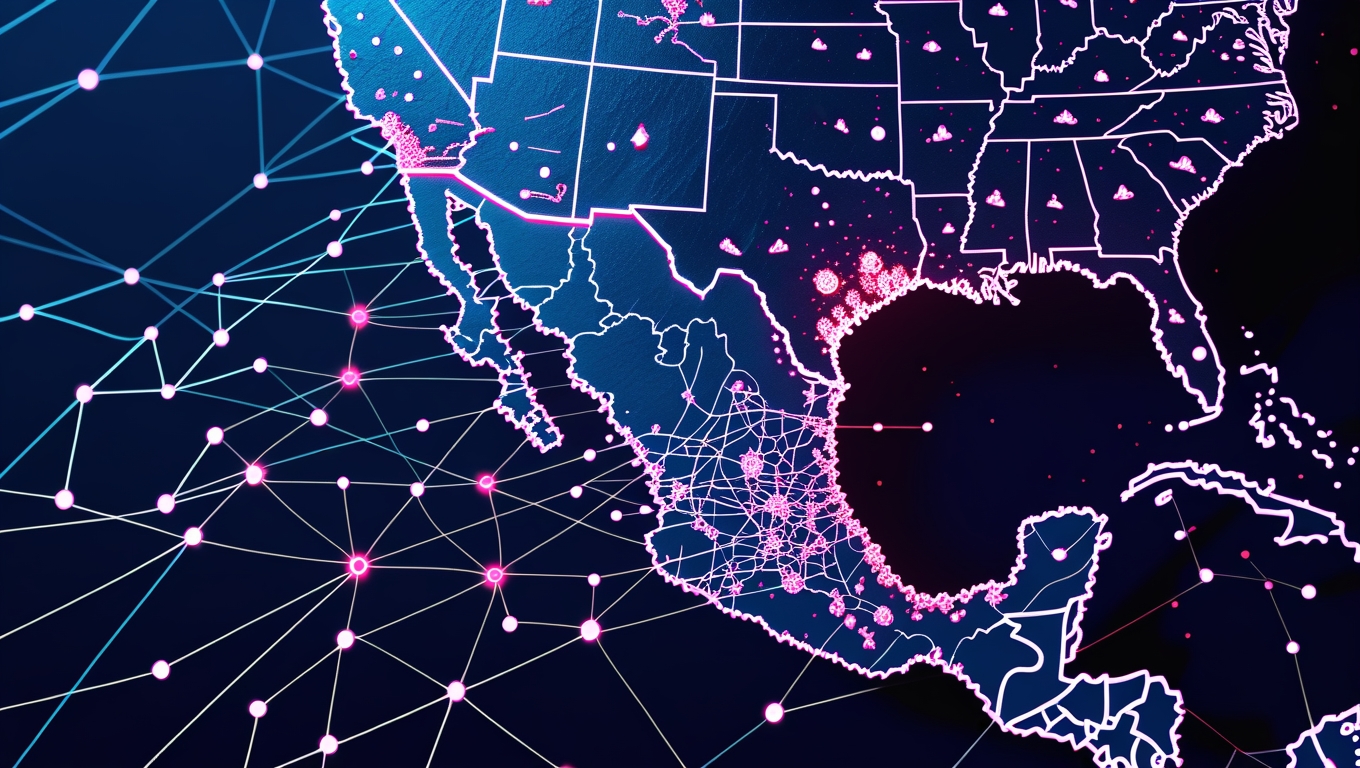
Killing the most powerful cartel leader in the world in a single operation is exactly the kind of tactical victory that can accelerate a strategic problem.
On February 22, 2026, Nemesio Oseguera Cervantes — known as El Meno, the operational commander of the Jalisco New Generation Cartel (CJNG) — was eliminated in what reports indicate was a joint US-Mexican military operation, likely with Delta Force involvement. The most wanted drug lord in the world, described as the modern-day Pablo Escobar with a higher body count, is dead. Within hours, CJNG fighters flooded the streets of Guadalajara and surrounding Jalisco state, opening fire on police, soldiers, and civilians.
This is the decapitation strategy problem. And if you understand Clausewitz, you already know the next chapter.
What Center of Gravity Analysis Actually Tells You
Clausewitz defined the center of gravity as the hub of all power and movement, the point against which all energy should be directed. The military application: identify the single source of cohesion in your adversary's structure, destroy it, and the rest collapses.
The strategic assumption behind targeting El Meno was that he was CJNG's center of gravity. And he may have been — for the specific variant of disciplined, coordinated, nationally-scaled criminal enterprise that CJNG represented under his leadership. CJNG was not a street gang. It was a paramilitary criminal organization operating across 30+ Mexican states with a military structure, specialist cells, and international logistics reaching into Europe, Asia, and the United States.
The defeat of the enemy's armed forces is the true goal of warfare... a battle is won not when the enemy flees but when his power of resistance is destroyed.
— Carl von Clausewitz · On War
El Meno's death destroys his personal power of resistance. What it does not automatically destroy is the organization he built. This is the critical distinction between killing a leader and defeating an organization. Pablo Escobar's death in 1993 is the canonical case study. The Medellin Cartel collapsed — but the Cali Cartel, already positioned, absorbed the vacuum and expanded. The cocaine supply chain didn't disappear. The power structure redistributed.
The Decapitation Paradox
There is a pattern in decapitation strategies against non-state armed groups that military and intelligence analysts have documented consistently since the Cold War:
When the killed leader was a centripetal force — someone whose personality and relationships held rival factions together — his death fragments the organization into competing successor factions, each more violent and less controllable than the unified predecessor.
When the killed leader was a disciplinary force — someone whose authority maintained operational security, minimized civilian casualties (strategically, not morally), and enforced cartel rules — his death removes those constraints. What follows is often more brutal, more chaotic, and harder to negotiate with.
El Meno was both. CJNG under his command operated with a degree of organizational discipline rare among criminal enterprises. The immediate street response after his death — fighters flooding civilian areas, indiscriminate fire on anyone in uniform — is the behavioral signature of an organization that has lost its command authority before a succession plan was in place.
The initial chaos following El Meno's death is not evidence that the operation succeeded in destroying CJNG. It's evidence that CJNG's command-and-control structure was dependent on him personally. That dependency makes the transition period maximally dangerous.
This is not an argument against the operation. El Meno was responsible for the deaths and poisoning of an extraordinary number of people, including Americans. The operation was, on its own terms, a legitimate and likely necessary action. The strategic analysis is separate from the moral calculus.
What the US Strategic Posture Now Requires
Delta Force operating in Mexico — if confirmed — represents a significant escalation in the US operational posture toward cartel organizations. It is also a strategic commitment with implications that extend well beyond this single operation.
Decapitation without replacement is the historical failure mode. The United States eliminated Al-Zarqawi in 2006. ISIS emerged. The United States killed Bin Laden in 2011. Al-Qaeda fragmented and metastasized. Killing the leader without degrading the organizational capacity, financial infrastructure, and succession pipeline produces a tactical win and a strategic continuation of the underlying problem.
The questions the US-Mexico joint strategy must now answer:
- Succession targeting — who are the top three CJNG successors and what operations exist to prevent them from consolidating power?
- Financial disruption — CJNG's international revenue streams (fentanyl, synthetic drug supply chains into the US, European and Asian distribution networks) continue regardless of leadership. Financial network disruption is as important as kinetic action.
- Stability management — the Mexican government needs to restore civilian calm in Jalisco and surrounding states within 72 hours. A prolonged street combat phase legitimizes successor narratives of strength.
Sun Tzu's highest art is defeating the enemy before the battle is fought. The second-highest art is forcing a favorable negotiation. The lowest art — though sometimes necessary — is direct kinetic action. The US-Mexico operation chose the lowest art. What comes next determines whether the higher arts were preserved.
The Boyd Cycle Applied to Cartel Warfare
Colonel John Boyd's OODA loop — Observe, Orient, Decide, Act — provides the operational framework for what the US-Mexico forces must do in the next 72 hours.
The cartel's OODA cycle is currently disrupted. Their observation of the new environment (El Meno gone) is incomplete. Their orientation (who leads now, what are the new rules) is chaotic. Their decisions are tactical and reactive (flood the streets, demonstrate force). Their actions are uncoordinated.
This is the window. When an adversary is cycling through the OODA loop slowly and reactively, the force with clear strategic intent can make decisions faster and at higher leverage. The Mexican military with US intelligence support has a brief period of decision superiority — a period in which organized, sequenced actions (successor targeting, financial node disruption, communications network degradation) can collapse CJNG's ability to reconstitute before it stabilizes under new leadership.
That window closes within days. Cartel organizations are adaptive systems. They've survived decapitation attempts before. The ones that survived adapted their command structures to be less leader-dependent.
The tactical kill happened. The strategic question is what follows.
Explore the Invictus Labs Ecosystem
Follow the Signal
If this was useful, follow along. Daily intelligence across AI, crypto, and strategy — before the mainstream catches on.
Iran's A2/AD Play: Why the Strait of Hormuz Just Got More Complicated
Whether or not Iran's new naval missile is actually hypersonic is the wrong question. The right question is what a 90-mile sea-based SAM bubble does to the strategic calculus for US carrier operations in the Persian Gulf.

Ukraine's Robot Army and the Death of Attrition Warfare
In July 2025, Ukraine captured Russian soldiers using an assault force made entirely of drones and robots. The future of land warfare isn't theoretical anymore — it's operational. The strategic implications for everything from conscription to defense economics haven't been absorbed yet.

Boyd's OODA Loop Is Not a Combat Framework — It's a Framework for Life
Colonel John Boyd designed the OODA loop for aerial dogfights. But the insight that Orient is the most important phase — and that Orient contains all your biases — makes this the most powerful cognitive framework for traders, engineers, and leaders.