Claude Code Remote Control: The End of Being Tethered to Your Desk
Anthropic just shipped mobile remote control for Claude Code. No SSH hacks. No cloud merges. Your phone becomes a window into your local dev environment — and it changes the builder workflow entirely.
The most productive engineers I know do not write the most code. They maintain the most unbroken context across the most fragmented days.
That distinction matters because modern engineering work does not happen in clean four-hour blocks. It happens in gaps — between meetings, during commutes, in the fifteen minutes before a family dinner when an architectural solution suddenly crystallizes and you need to act on it before the clarity dissolves. The constraint was never compute or capability. It was that your development environment lived on a machine bolted to a desk, and you did not.
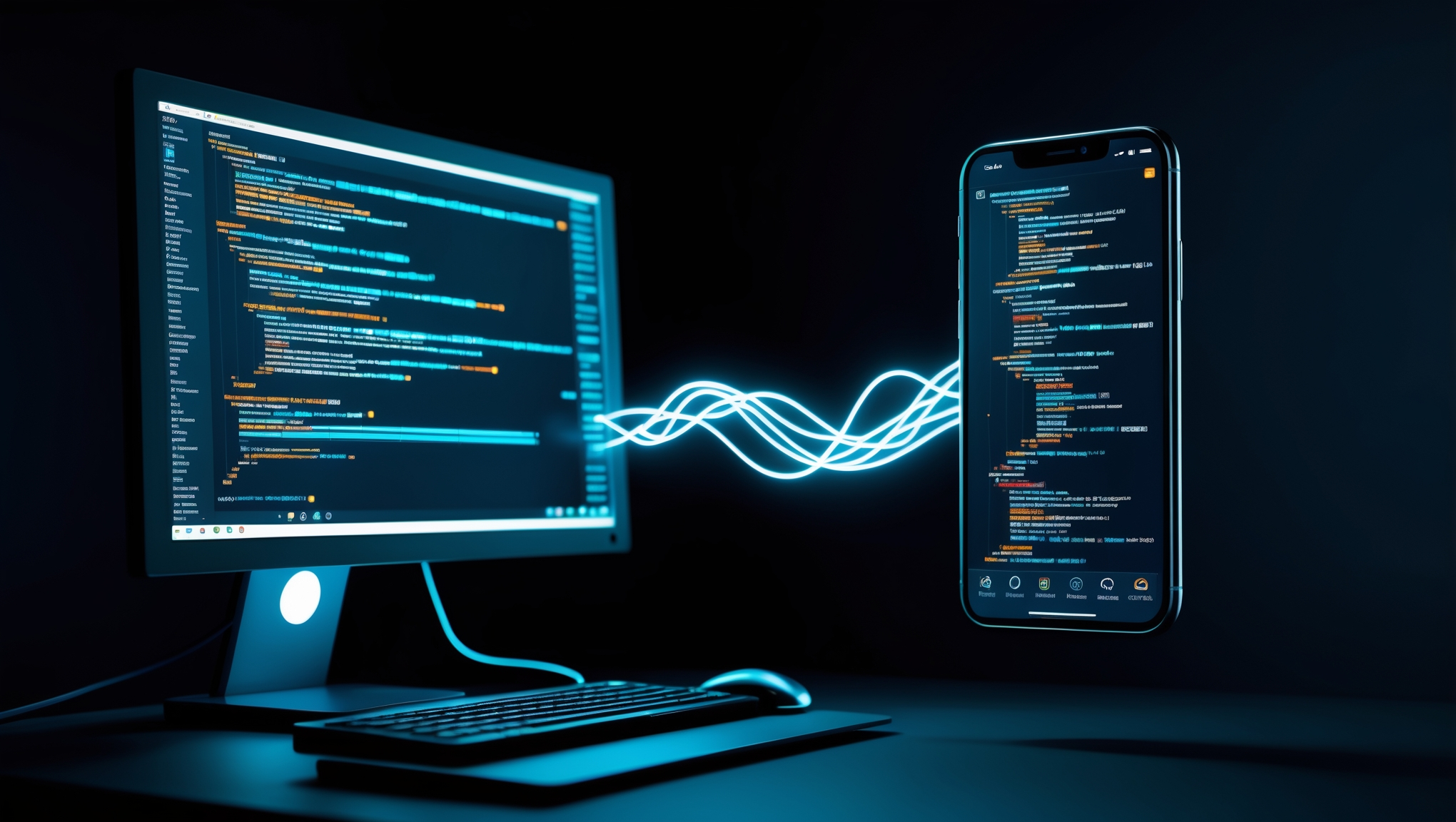
Anthropic just removed that constraint. Claude Code now supports remote control — the ability to transfer an active coding session from your terminal to your phone, with the work continuing to execute locally on your machine. No SSH tunnels. No cloud-hosted codespaces. No merge conflicts when you return. Your phone becomes a live window into your local dev environment, and the implications for how serious builders structure their days are significant.
How It Actually Works
The mechanism is deliberately simple, which is the right engineering decision. From any active Claude Code terminal session, you type /remote-control. The system generates a session link that routes to either your mobile browser or the Claude app on your phone. From that point forward, every prompt you send from your phone executes on your local machine — same filesystem, same environment variables, same running processes.
This is not a cloud proxy. There is no intermediate server running your code in someone else's infrastructure. The compute stays local. The session state stays local. When you walk back to your desk, there is nothing to pull, nothing to merge, nothing to reconcile. You just sit down and keep working.
The distinction matters more than it appears. Previous mobile coding solutions — including Claude Code's earlier cloud-based mobile experience — introduced a synchronization tax. You would write code remotely, then spend time pulling it down, resolving conflicts, verifying that the remote environment matched your local one. That friction was not catastrophic, but it was enough to make the workflow feel like a workaround rather than a feature. Workarounds get abandoned. Native experiences get adopted.
The Workflow Shift
The correct mental model is not "coding on your phone." Nobody wants to write a Redux reducer on a five-inch screen. The correct model is continuous context — the ability to keep a coding conversation alive across physical locations.
Here is what that looks like in practice. You are building a feature at your desk. You get the architecture right, scaffold the components, and hit a point where Claude Code needs direction on implementation details. You need to leave — gym, school pickup, grocery run. Previously, you had two options: abandon the context and restart later, or delay leaving. Both are costly. Lost context means re-explaining your intent to the AI. Delayed departure means friction in the rest of your life.
With remote control, you transfer the session to your phone and keep the conversation going while you move. You are not typing out functions. You are making decisions: "Yes, use that pattern." "No, put the state management in the parent component." "Add error handling for the API timeout case." These are the high-leverage prompts that keep a session productive — and they work perfectly on a phone keyboard.
When you return to your desk, the code is already written, already on your filesystem, already running. The transition cost is zero.
Where This Fits in the AI Builder Stack
The honest assessment is that this does not replace every mobile AI coding workflow. As Alex Finn breaks down in his analysis, the landscape now has distinct tools for distinct modes of work.
Deep focus, complex projects: Claude Code remains the tool. The terminal interface, the file-level awareness, the ability to guide implementation step by step — that is unmatched for serious engineering sessions. Remote control extends those sessions beyond your desk without compromising the experience.
Quick prototypes and autonomous tasking: Platforms like OpenClaw — persistent AI agents that run 24/7, accept instructions via messaging platforms, and execute asynchronously — occupy a different niche. They excel when you want to fire off a list of tasks and walk away entirely, or when you need an agent with long-term memory and context about your infrastructure. The trade-off is less granular control during execution.
Rapid fixes and shipping: Claude Code, whether desktop or mobile, handles this well. Identify the bug, describe the fix, let it execute, push to production. The remote control feature means you can do this from anywhere without needing your laptop.
The temptation will be to use remote control for everything. Resist it. Phone screens are decision-making interfaces, not code-authoring interfaces. Use mobile for steering — approving file changes, choosing between approaches, providing architectural direction. Save the deep reading and complex debugging for the full terminal.
The Broader Signal
Anthropic shipping this feature tells you something about where the industry is heading. The assumption for decades has been that software development requires a workstation — a large screen, a mechanical keyboard, a specific physical context. That assumption is being systematically dismantled.
First, AI coding assistants removed the requirement that you type every line yourself. Then, agentic coding tools like Claude Code removed the requirement that you understand every implementation detail to ship working software. Now, remote control removes the requirement that you be physically present at your development machine.
Each removal does not eliminate the need for engineering skill. It redistributes it. The skill shifts from writing code to directing code. From implementation to architecture. From syntax to judgment. And judgment can be exercised from a phone screen as effectively as from a thirty-two-inch monitor.
The engineers who will benefit most from remote control are not the ones who want to code more hours. They are the ones who want to maintain engineering momentum across lives that do not pause for build cycles. Parents who step away for bedtime routines. Managers who split time between meetings and technical work. Founders who need to ship features between investor calls.
The constraint was never talent or ambition. It was that your tools demanded your physical presence. That demand just ended.
What To Do With This
If you are already using Claude Code, the setup is trivial. Start a session, type /remote-control, and test the workflow with a small task from your phone. Build the muscle memory before you need it under pressure.
If you are not yet using Claude Code, this is a reasonable inflection point to start. The combination of local execution, agentic capability, and now mobile continuity creates a development workflow that did not exist six months ago. The learning curve is real but short, and the productivity compound is significant.
The builders who will pull ahead in the next twelve months are not the ones with the most screen time. They are the ones who figured out how to keep their strategic momentum alive in the gaps between sessions — in the car, in the waiting room, in the ten minutes before sleep when the solution arrives uninvited.
Remote control does not make you a better engineer. It makes you a more continuous one. And in a landscape where AI handles more of the execution, continuity of intent is the last remaining competitive edge.
Explore the Invictus Labs Ecosystem
Follow the Signal
If this was useful, follow along. Daily intelligence across AI, crypto, and strategy — before the mainstream catches on.
Perplexity Computer and the Fork in the AI Agent Road
Perplexity just launched a managed multi-model agent platform that orchestrates 19 AI models. It is a direct shot at open-source agent systems — and the architectural trade-offs tell you everything about where this industry is splitting.
Meta's Ghost Patent Isn't About Death. It's About Who Owns Your Digital Persona.
Meta patenting an AI that keeps posting after you die sounds dystopian. It is. But the dystopia isn't the ghost posting — it's what the patent reveals about who actually owns your behavioral data and what they intend to do with it.
Stop Asking Which AI Model Is Best. Ask Which Problem You're Solving.
The competitive edge in AI tooling isn't which model you have access to. It's routing discipline — knowing exactly which model handles which class of problem, and building that logic into your systems.