Stop Calling It a Bull Market or a Bear Market. Start Trading the Legs.
The traders losing money right now are asking the wrong question. Not 'is this a bull or bear market?' but 'which direction is the next leg, and how far does it go?' The InDecision Framework is built for exactly this environment.

The most expensive question in crypto right now isn't about Iran, tariffs, or Fed policy. It's the one that sounds like analysis but isn't: "Is this a bull market or a bear market?"
That question has a binary answer structure grafted onto a non-binary reality. Markets that are trending cleanly are the minority of market time. The majority of time — including right now — markets are compressing, expanding, compressing again, with both bull and bear legs nested within a larger ranging structure. The traders who thrive in this environment aren't the ones who called the direction correctly. They're the ones who stopped trying to call the direction and started reading the legs.
The macro backdrop has gotten significantly more complicated in the past 30 days. Trump's tariff escalation — now in direct conflict with Supreme Court intervention — is generating volatility that doesn't resolve cleanly into risk-on or risk-off. Bitcoin is neither in a confirmed downtrend nor in a confirmed uptrend. It's in a compression zone, generating both strong bear legs and strong bull legs, with a pending decision that will confirm the next major directional move. That's not uncertainty. That's opportunity — if you have the right framework.
The Bull/Bear Binary Is a Cognitive Shortcut That Costs Money
Retail crypto participants think in labels. "This is a bull market, so I buy the dips." "This is a bear market, so I sell the rallies." The problem with label-based thinking is that it's retrospective — you apply the label after enough data exists to confirm it, which is always after the best entry opportunity has passed.
The professional trader's actual question is: "What is the market bias for the next 24-48 hours, at the specific price structure I'm watching, and what's the risk I'm wrong?"
That's a fundamentally different question. It's time-bound. It's structure-specific. It includes explicit acknowledgment of error probability. And it generates a very different set of decisions than "I think this is bullish, so I'm holding."
The current Bitcoin setup: a weekly close in progress with a pin bar structure that, if confirmed green, statistically precedes a continuation move toward 78-80K. That's a 24-48 hour bias read — not a macro call. These are different instruments. Trading the former with the latter's confidence profile is how accounts get wrecked.
The tariff-induced volatility compounds this. When Trump escalates tariffs and the Supreme Court pushes back, markets don't know what the equilibrium looks like. Uncertainty generates volatility. Volatility generates both legs simultaneously — bear legs for macro-exposed positions, bull legs for assets that benefit from de-dollarization and non-sovereign money narratives. Bitcoin can catch both, depending on which narrative is driving price action in any given window.
How the InDecision Framework Reads This Environment
The InDecision Framework was built specifically for environments like this — where the macro picture is contested, the trend is unconfirmed, and the binary "bull or bear" call is the wrong level of resolution.
The framework scores six factors, weighted by contribution to the 24-48 hour directional bias:
Daily Pattern (30%): What is the dominant structure on the daily chart, and which direction does it favor in the next session? Right now: compression with a pending pin bar — neutral to slightly bullish depending on close.
Volume (25%): Is the volume profile supporting the stated price action, or is the move happening on thin volume that's likely to reverse? Thin volume on the bear leg (selling exhaustion) is a bullish signal regardless of price direction.
Timeframe Alignment (20%): Are the weekly, daily, and 4-hour timeframes all pointing the same direction? Misaligned timeframes indicate high-noise environments. Currently: weekly and daily are diverging slightly — noise environment, reduce position sizing.
Technical Confluence (15%): Are there clean technical levels (support, resistance, prior structure) that the price is reacting to? Strong confluence zones are high-probability reaction points regardless of direction.
Market Timing (10%): Where are we in the weekly and monthly cycles? Currently approaching a weekly close that will either confirm or negate the pending structure.
Risk Context: What's the macro environment for a wrong call? Trump-tariff volatility means liquidation cascades are possible on surprise news. Size accordingly.
The current aggregate score: weak bullish bias for the near-term setup, with elevated noise from the macro environment. Not a high-conviction long entry — a monitored position entry zone. That's a different recommendation than "the bull market is back."
The Short Squeeze Mechanic Everyone Is Watching
There's one specific technical setup that deserves attention in the current environment: elevated short interest at a compression zone that has historically preceded expansion moves.
When retail participants are net-short and institutional positioning is net-long (the pattern we discussed in the context of geopolitical risk in a prior analysis), the conditions for a mechanical short squeeze exist. This doesn't mean the market must squeeze — it means the conditions for a squeeze are present, and the probability of an upside move is asymmetrically higher than the probability of a downside acceleration.
The short squeeze thesis: if Bitcoin closes the weekly above the compression zone with a green pin bar, the mechanical buying from short covers compounds with the institutional long positioning to produce a move that's larger and faster than the underlying fundamental case would justify. That's the 78-80K target scenario. Not a certainty — an elevated probability event in a specific scenario.
This is the distinction between trading and gambling. Gambling is "I think Bitcoin goes up." Trading is "In this specific scenario (green weekly close + volume confirmation + short squeeze trigger), the bias toward 78-80K is elevated relative to baseline. I'm sized for that scenario, with a predefined exit if the scenario invalidates."
The Framework Advantage in Volatile Markets
Tariff wars, geopolitical disruptions, Supreme Court interventions in executive policy — these are all external variables that make the macro environment harder to read. They're also the exact conditions where framework-based analysis compounds its advantage over narrative-based analysis.
Narrative analysts ask: "What does the tariff war mean for Bitcoin?" The answer is ambiguous, and the analysis is backward-looking (what happened to Bitcoin during past tariff escalations?).
Framework analysts ask: "What are the six factors scoring at right now, and what does the aggregate tell me about the next 24-48 hours?" The answer is current, time-bound, and generates a decision — not a position.
The traders who will exit the current volatile environment with positive accounts are the ones who stopped labeling the market and started reading the legs. Bull or bear is a retrospective title. The leg score is what you actually trade.
Explore the Invictus Labs Ecosystem
Follow the Signal
If this was useful, follow along. Daily intelligence across AI, crypto, and strategy — before the mainstream catches on.

From Framework to Signal: Building the InDecision API
The InDecision Framework ran for 7 years as a closed system — Python scorers feeding Discord and a trading bot. Turning it into a public API forced architectural decisions that changed how I think about signal infrastructure.
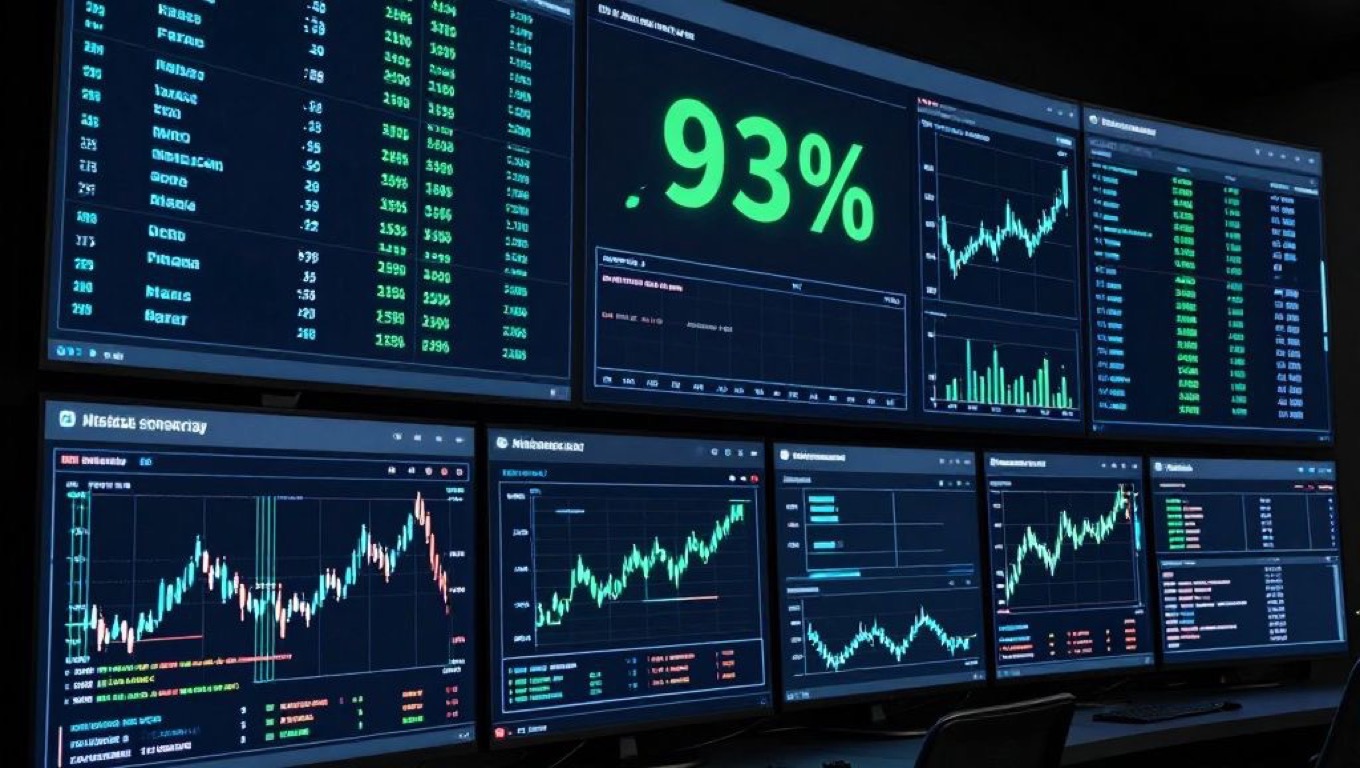
The Signals Were Real: InDecision Framework Hits 93% Win Rate in Live Markets
The bot was cycling every 2 minutes — its own watchdog killing it every 129 seconds. The signals inside were perfect: 86–100/100, 92% accuracy, calling direction while the market priced uncertainty at 50/50. One coding session fixed the infrastructure. The rest is on-chain.

The Trader Behind the Bot
PolyEdge scored 65/100 and sat. Knox traded manually and went 3 for 3. The gap between those two outcomes reveals the exact mechanisms the model was missing.